

Do you have an area in your yard that tends to hold water after a significant rainfall? If your answer is YES, then you will want to keep reading.
Planting trees in these areas will help to alleviate drainage problems you may be experiencing. Not all trees or shrubs will suffice in that spot; instead, plant a tree that will thrive in wet site conditions.
iTrees.com owner, Marlee Harford, curated this list with your specific needs in mind. She carefully selected trees that are well-suited for problematic areas, that are prone to occasional standing water, or for planting near naturally wet areas, such as along lakes, ponds, or rivers.
The Unsung Heroes of Your Landscape:
Trees that thrive in wet environments play a crucial role in managing floodwater runoff. Also, they help to →
• Prevent soil erosion
• Enhance biodiversity
• Elevate your property's value!

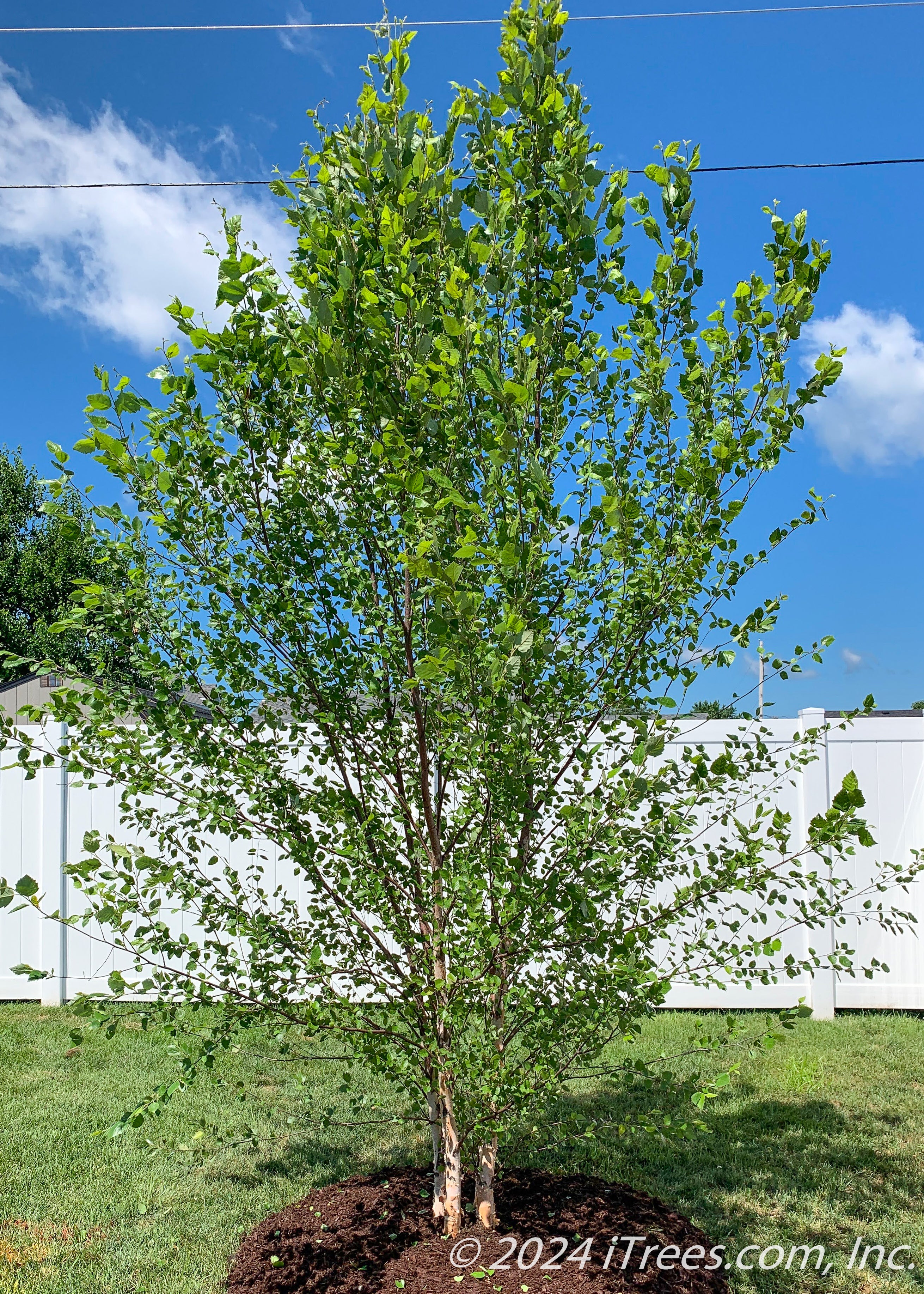
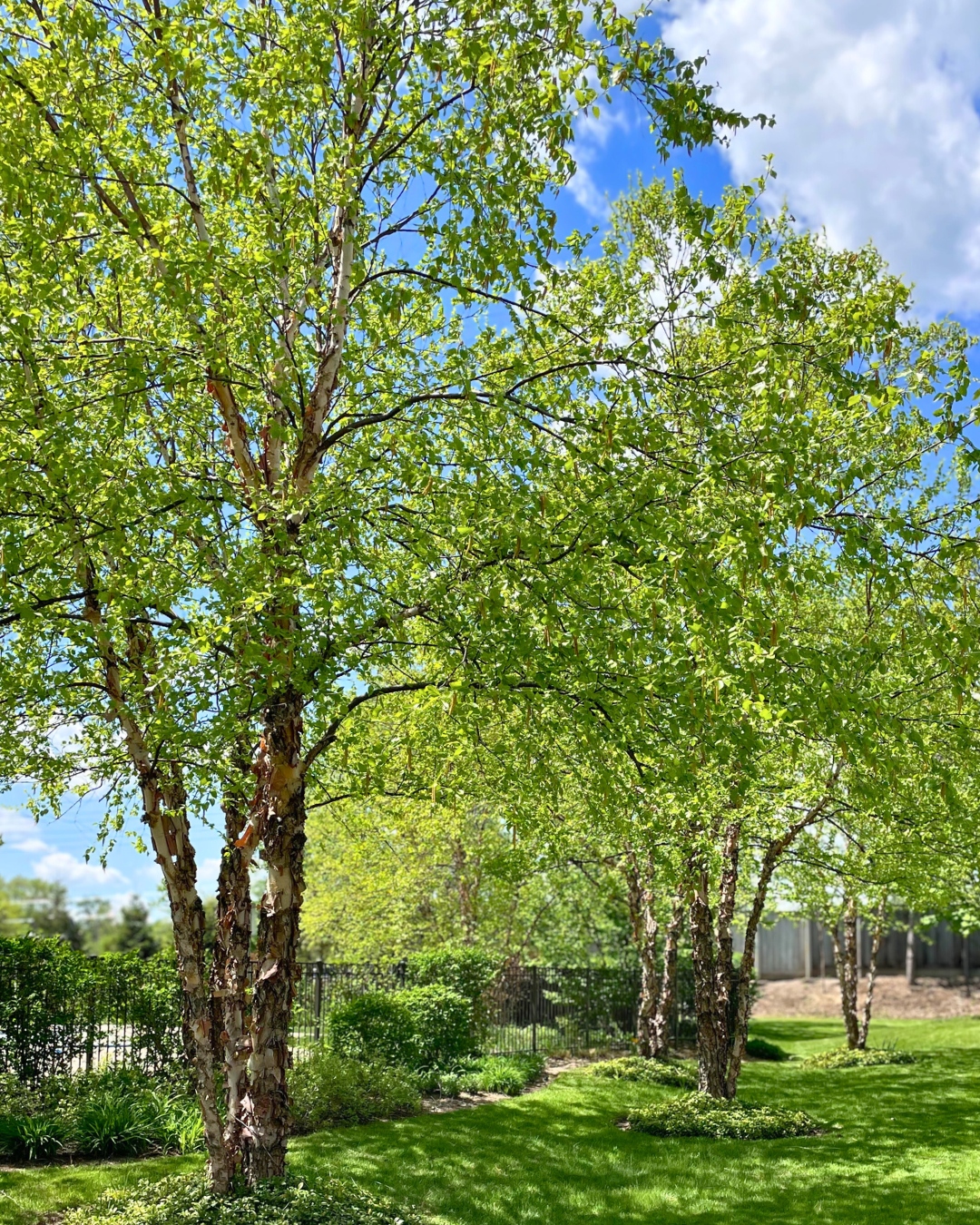
River Birch reigns supreme among ornamental shade trees! This tree has demonstrated exceptional performance in landscapes and is a trusted choice for customers. Its broadly pyramidal canopy gradually becomes more rounded with age, offering shade, privacy, and aesthetic appeal. This fast-growing tree is cherished for its ornamental peeling bark and stunning buttery golden-yellow fall color. River Birch is useful as a landscape accent, provides privacy, and offers relief from the intense summer heat. This native beauty grows naturally along river banks and streams. It's a go-to tree for areas prone to holding standing water. River Birch continues to prove why it remains a customer favorite!
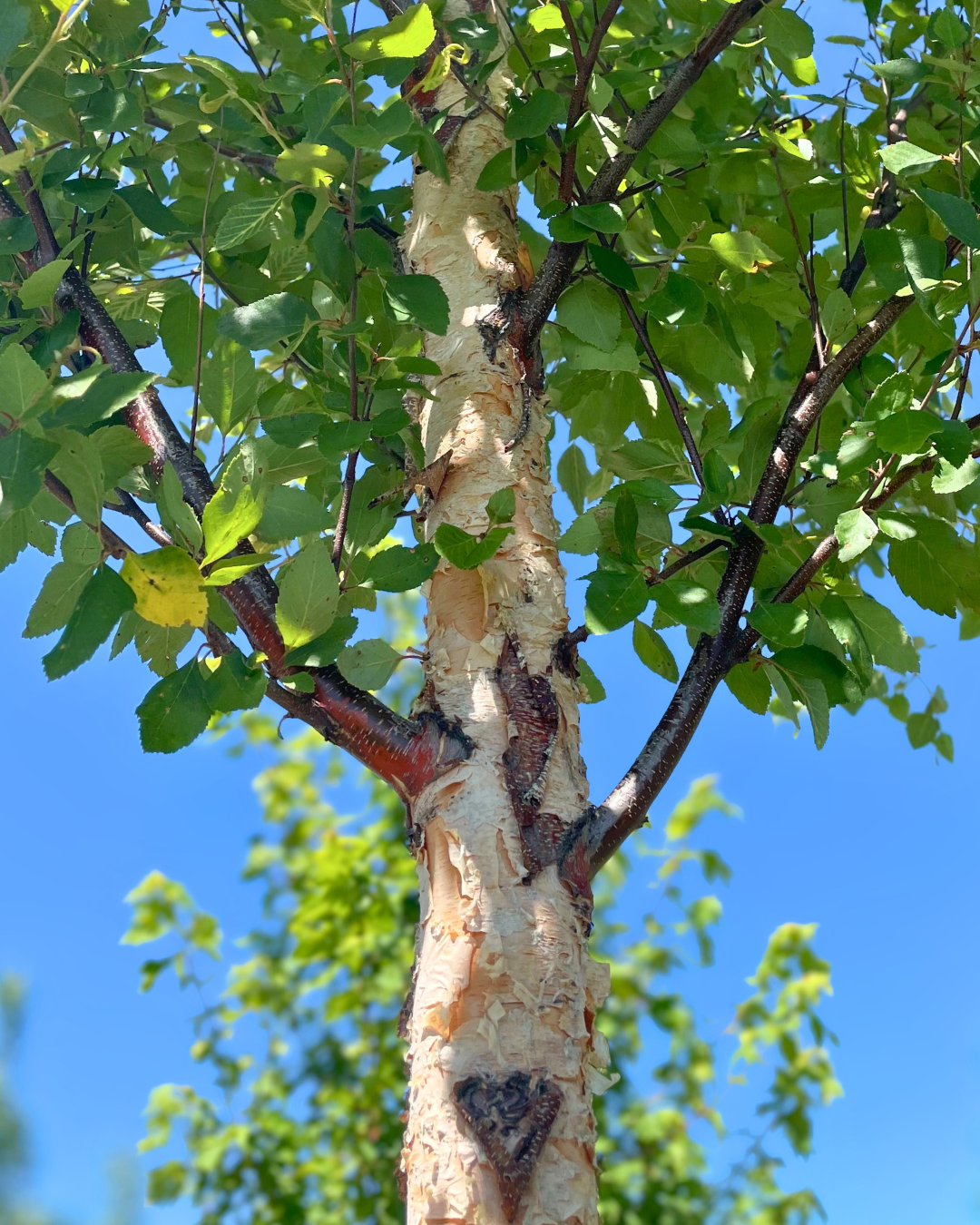
Heritage® River Birch is a fast-growing ornamental shade tree that adds beauty and privacy to outdoor spaces. Its attractive mottled bark reveals a smooth, creamy-white interior. In the fall, its large, glossy leaves transform into a stunning golden color. This charming tree attracts songbirds and butterflies, while its lush canopy offers cool shade, making it an excellent choice for screening decks and patios. With its broadly pyramidal shape and natural ornamental features, Heritage® River Birch provides year-round beauty and is a valuable addition to any landscape. Like its parent, River Birch, Heritage® River Birch is a useful yet beautiful option for those tricky locations that tend to hold standing water from time to time.
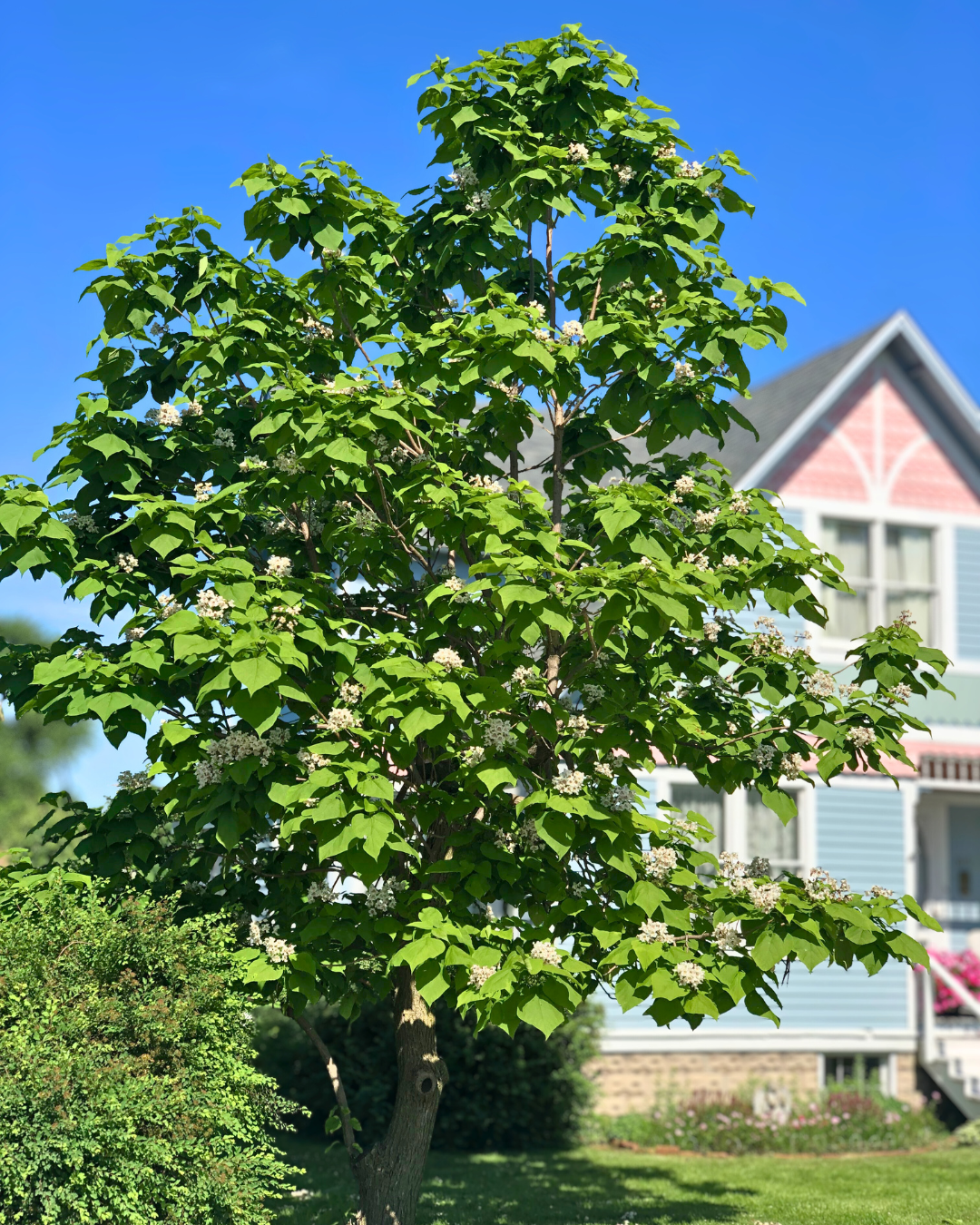
Northern Catalpa is a stunning Illinois native, known for its adaptability and beautiful late-spring blooms. It features a rugged branch structure that adds character to any landscape. In late spring to early summer, its shape is complemented by fragrant, white, bell-shaped flowers with vibrant yellow-orange and purple centers, attracting pollinators and hummingbirds. In autumn, its leaves shift from rich green to gentle yellow, providing ample shade and visual interest. This unique tree is an excellent choice for spacious landscapes, especially wet areas where shade and beauty are also needed. Enhance your outdoor space with the natural beauty and elegance of Northern Catalpa.
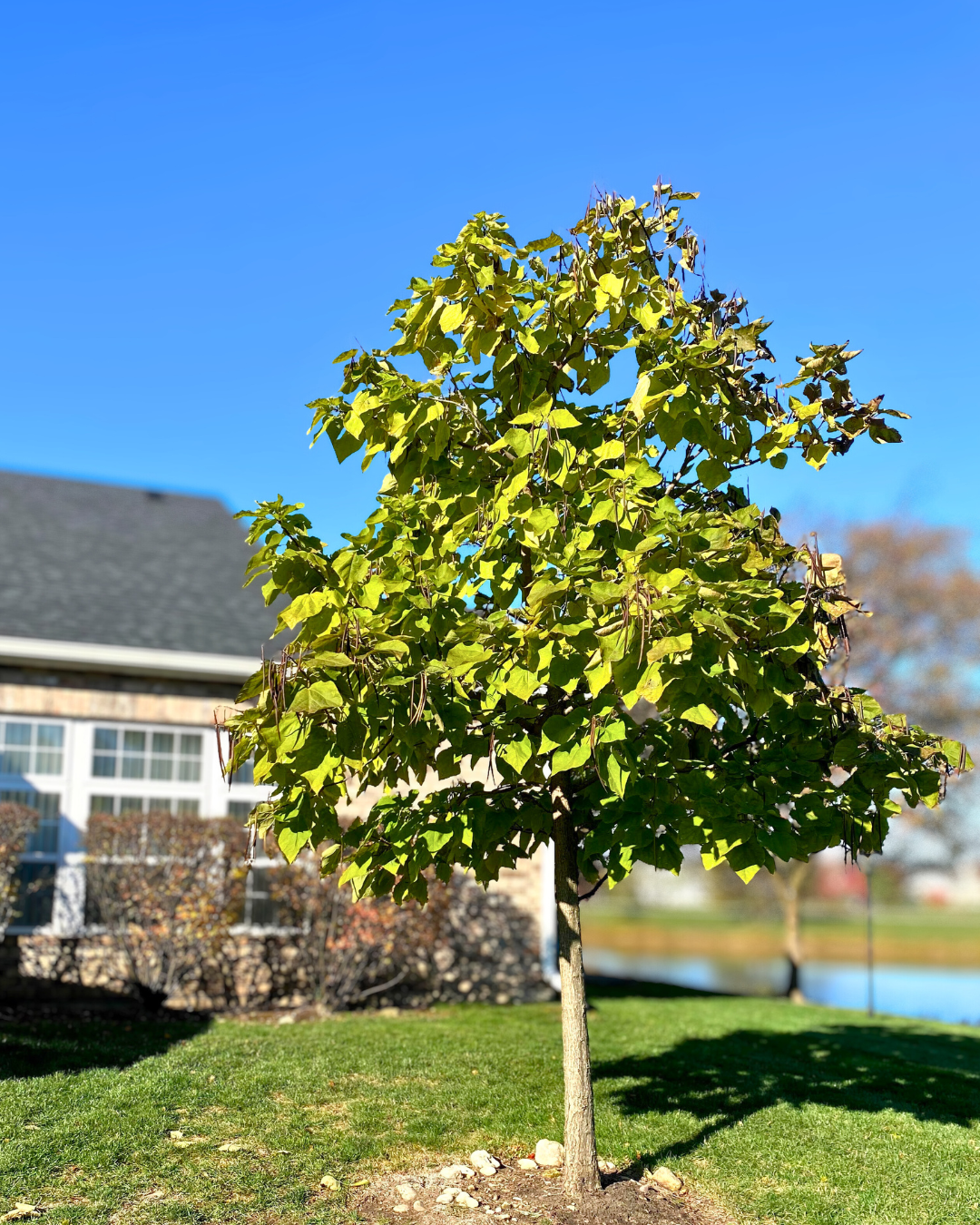
Heartland® Catalpa is about to steal the show in your yard! This adaptable, magnificent tree has a dark green canopy that forms a uniform, narrow oval shape. In spring, the Heartland® Catalpa tree bursts forth with heart-shaped leaves. From late spring to early summer, it showcases large clusters of fragrant white flowers with frilly edges and striking yellow and purple centers. These beautiful blooms attract birds and butterflies. When autumn arrives, Heartland® Catalpa transforms into a warm, soft yellow. If you need a shade tree that can withstand the harshest conditions, such as wet areas, heat, drought, and demanding urban environments, then your search ends here! Let Heartland® Catalpa take center stage in your yard!
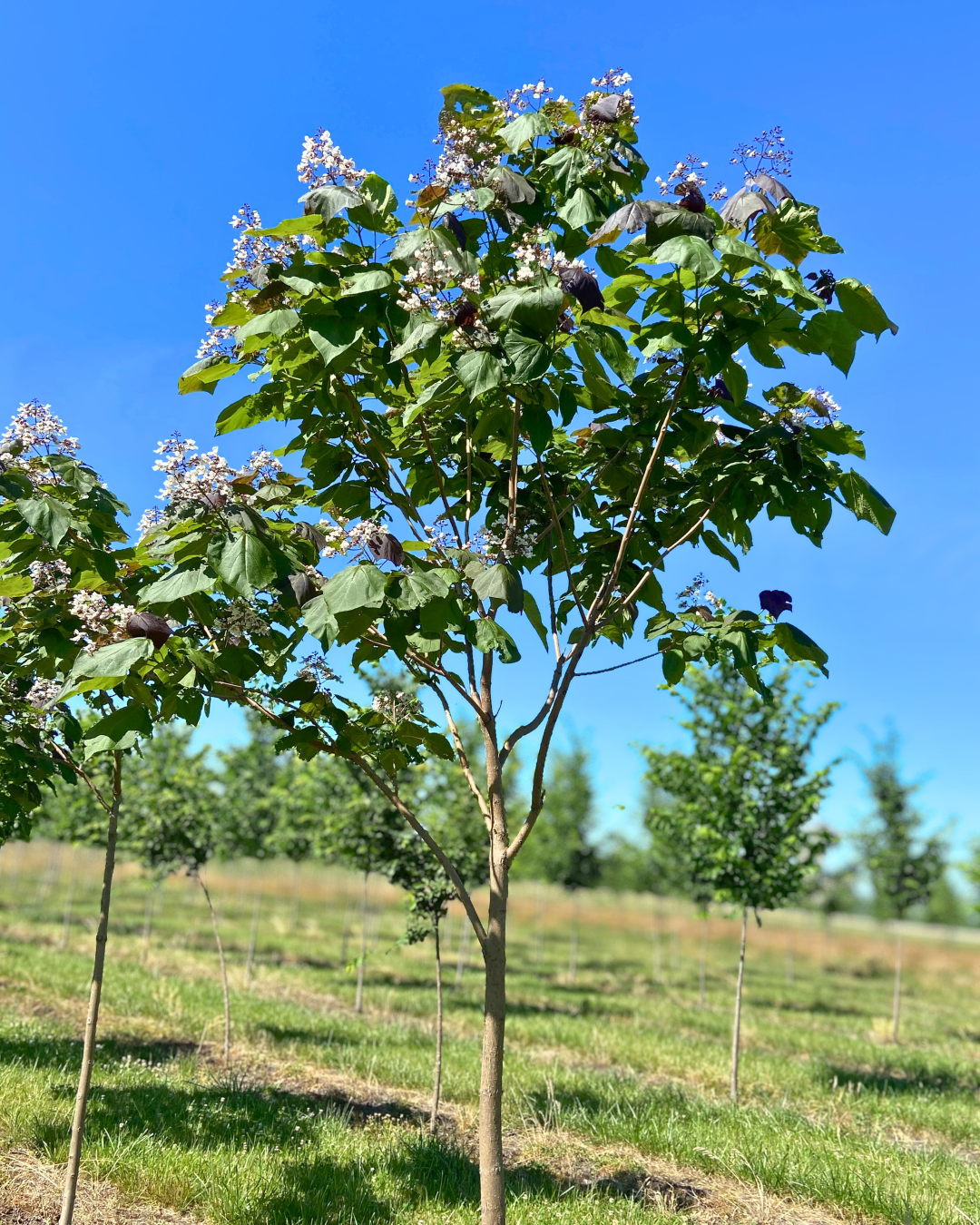
Purple Catalpa is another stunning ornamental shade tree known for its large leaves and impressive late-spring blossoms. In spring, its massive, deep purple leaves make a grand entrance, transforming into a beautiful bronze-green in summer. Late spring brings fragrant white flowers with bold yellow-orange and purple centers, creating a haven for birds and butterflies. As autumn approaches, the leaves shift to a soft golden hue, while long, slender pods add winter interest. Similar to Northern Catalpa, Purple Catalpa is a unique option offering both shade and beauty while being able to withstand wet areas. This tree will not only provide refreshing shade but also add unique charm to your outdoor space.
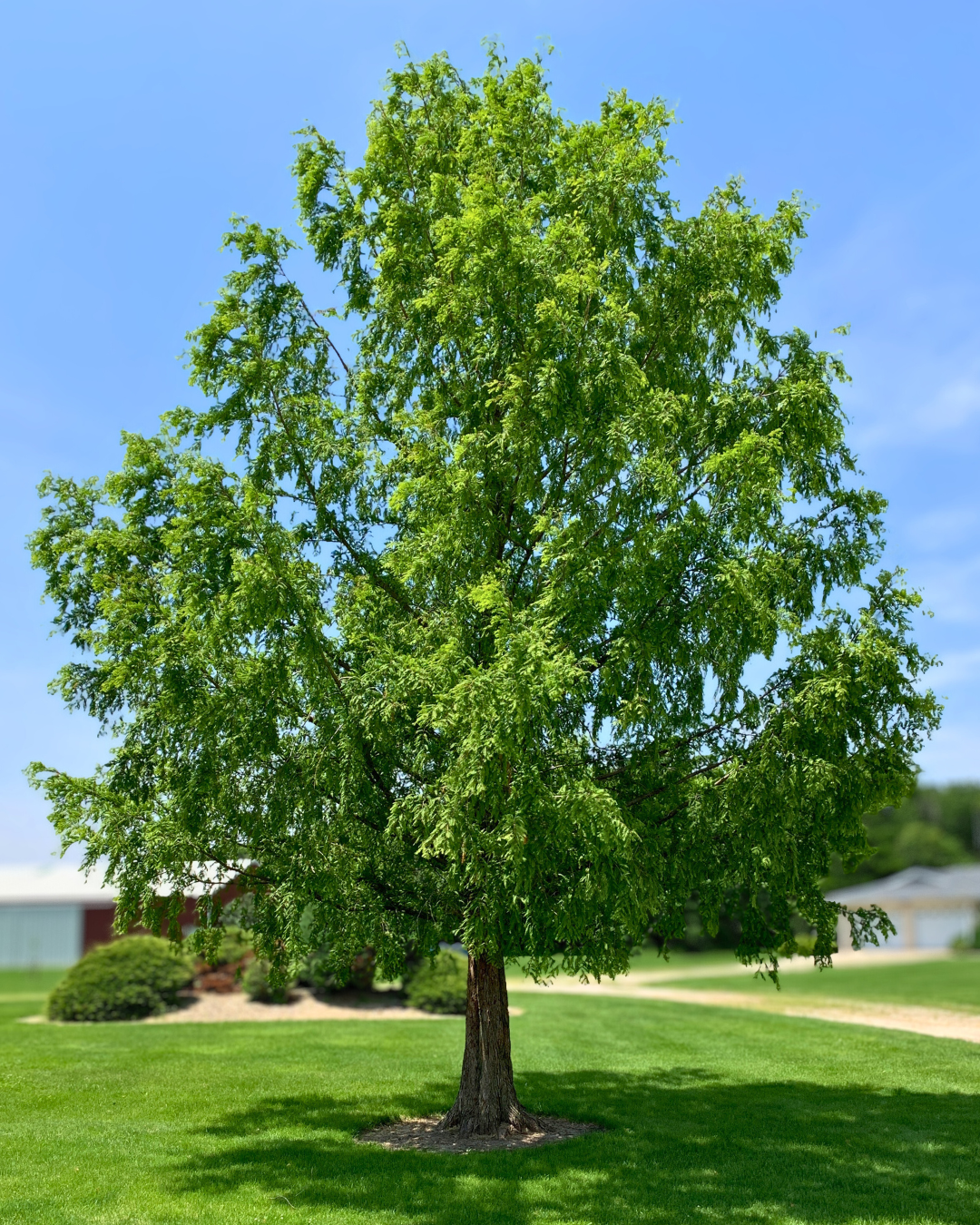
Dawn Redwood is a deciduous conifer. Simply put, this means it has similarities to evergreen trees. The big difference is that instead of holding onto its green needles during winter, this tree drops them in the fall. This characteristic allows the warmth of the winter sun to filter through its branches. In summer, Dawn Redwood adds a layer of texture to the landscape! Its beautiful shaggy canopy of green leaves is complemented by its red, flaking bark. In autumn, the leaves turn a coppery color before the twiglets drop to the ground. Its small leaf size makes fall cleanup a cinch! Due to its large mature size, be sure to plant this tree in an area where it will be admired and has room to grow and flourish. Dawn Redwood is pretty darn adaptable, tolerating not only dry sites and road salt but also occasional flooding and overly saturated areas. This makes it a truly unique specimen tree that is not only beautiful but functional too!
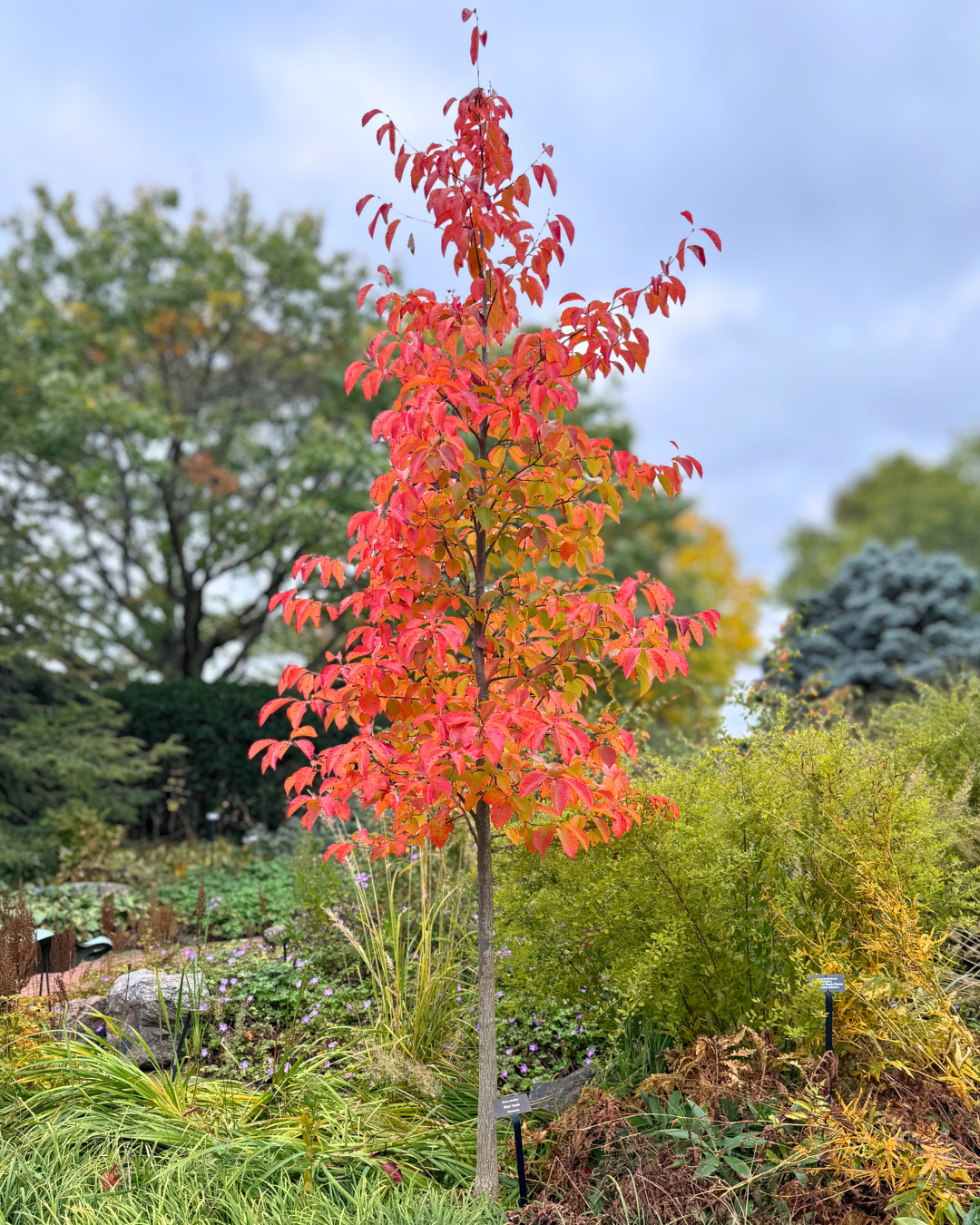
Picture it, a striking shade tree from the view of your kitchen window. As the seasons change, you will join this tree on a beautiful journey. Spring buds emerge into glossy green foliage. In summer, beneath its branches, rest can be found, and it becomes a comforting place of play. Its branches attract songbirds and other delightful wildlife. Then comes fall, bringing a brilliant display of fiery colors lighting up the landscape! Winter's finale is a display of architectural branching and the quiet beauty of soft snow on its horizontally tiered branches that grow out of its straight, upright trunk. This tree will bring a sense of peace to your heart and mind. Afterburner puts up with various site conditions ranging from clay soil, dry sites, tolerates road salt, and... you guessed it, wet sites!
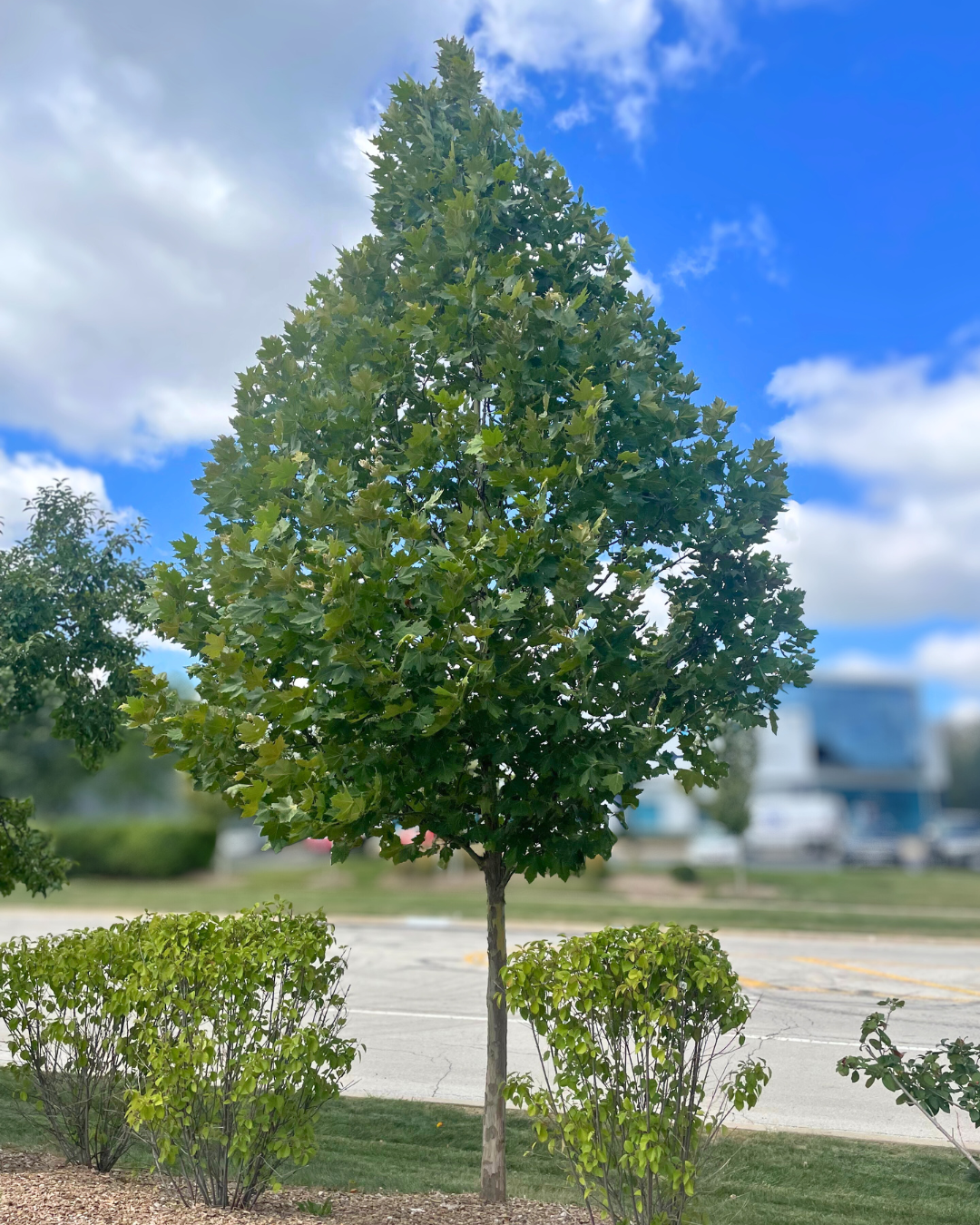
EXCLAMATION!® London Planetree
EXCLAMATION!® London Planetree is a tree to get excited about. Do you have an area where a large stately tree would be the absolute finishing touch? This is your tree! It's a fast grower, super-duper durable, and is attractive. In summer, its canopy is covered in large, green leaves with a velvety smooth underside. Its soft, dense canopy is complemented by its mottled, shedding bark. In the fall, its leaves will change to a warm, glowing yellow. This useful tree is suitable for parkways, malls, parks, shopping centers, or anywhere where you need a tough, fast-growing, and unique shade tree. The best part of all is that it is tolerant of just about all site conditions, including clay soil, dry areas, road salt, and saturated soils.
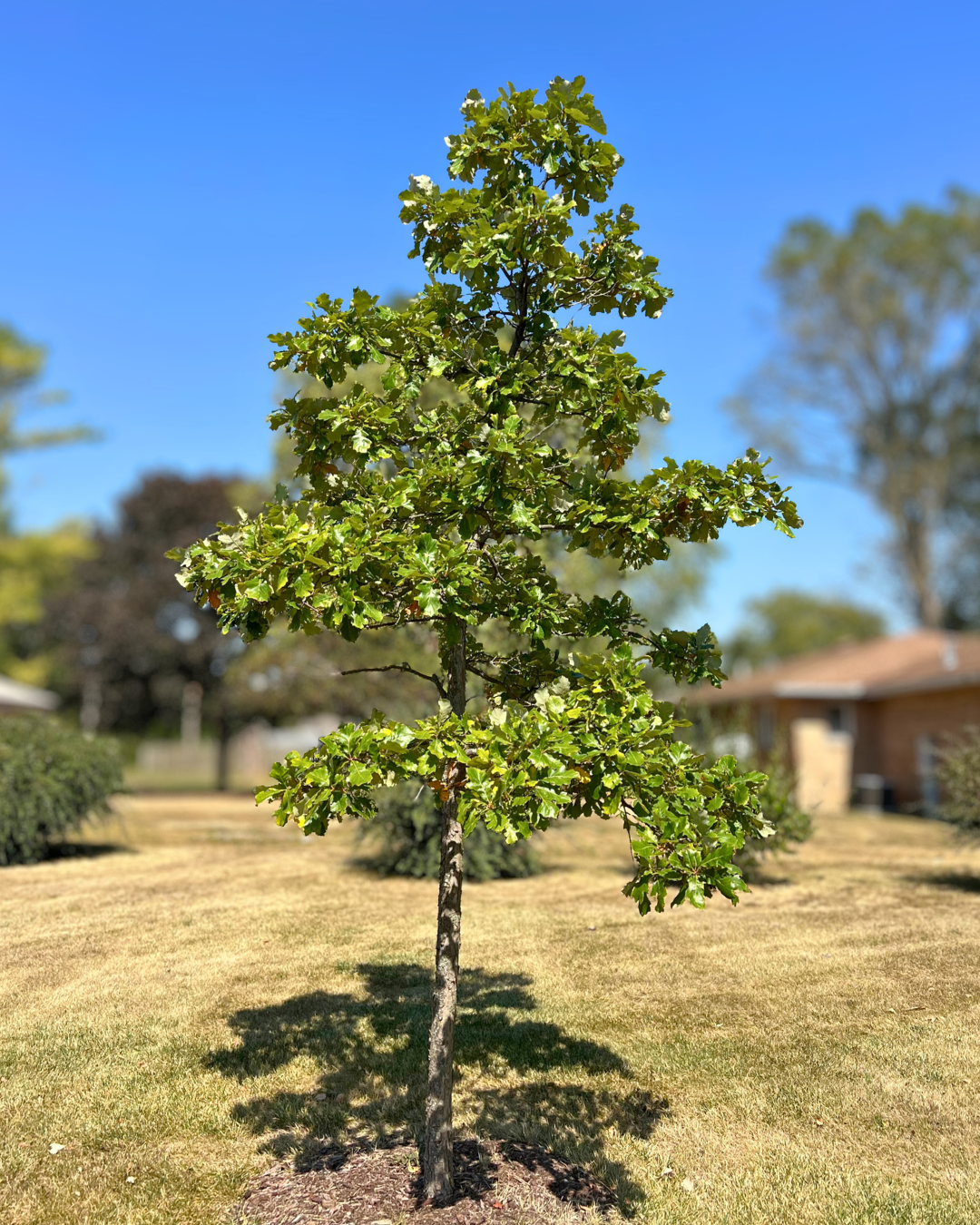
It's all in the name when it comes to Swamp White Oak! This native beauty is extremely versatile in the landscape. Tolerating wet, poorly drained soils. In summer, its canopy is covered in two-toned leaves with a dark green, shiny hue on top and a smooth silvery underside. In autumn, its leaves transform into classic fall hues ranging from yellow-gold to reddish-orange. Its acorns attract wildlife, adding to the whimsy and enchantment of the landscape. Swamp White Oak’s rough, peeling bark is extremely showy. It can be planted in dry sites, but loves water so much that it is sensitive to drought. Swamp White Oak can withstand occasional flooding, road salt, and overly saturated areas. While oaks are known for being slow growers, of the oaks, Swamp White Oak is one of the fastest-growing oaks available!
If you were to close your eyes and imagine a willow tree, it would probably appear in your mind near a pond or a river. That's because willow may be the number one tree people think of when considering a tree for wet areas. Niobe Golden Weeping Willow grows majestically along ponds, river banks, and streams. This tree should not be planted in confined areas due to its extensive root system. Niobe Golden Weeping willow requires ample room to flourish and do its thing! This tree is absolutely stunning when overhanging water. Niobe Golden Weeping Willow's brilliant yellow fall color lights up the landscape in autumn, and its long green swaying branches add enchanting color and texture to the summer landscape. This tree tolerates various site conditions, from alkaline soils, clay soils, road salt, and areas prone to flooding.
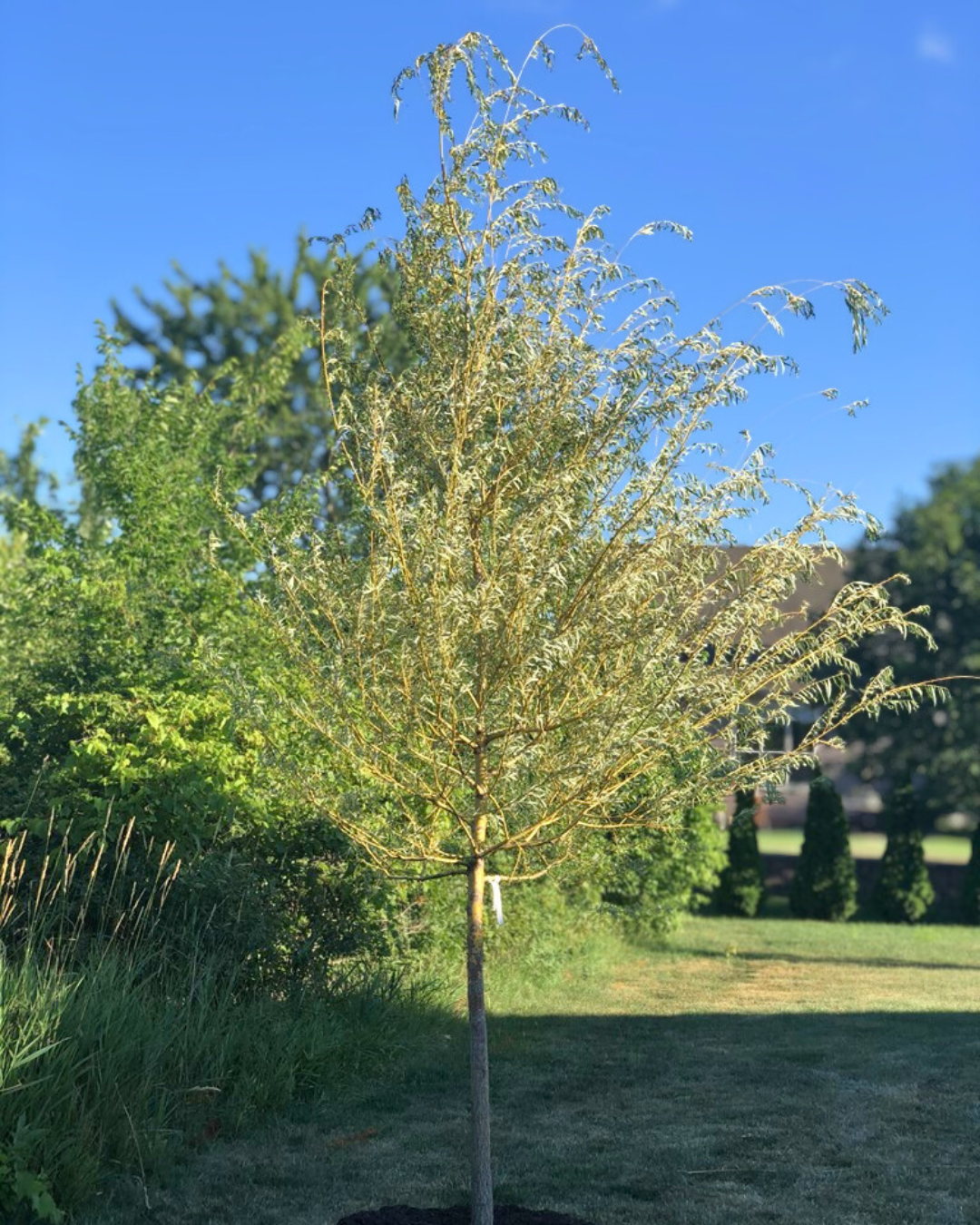
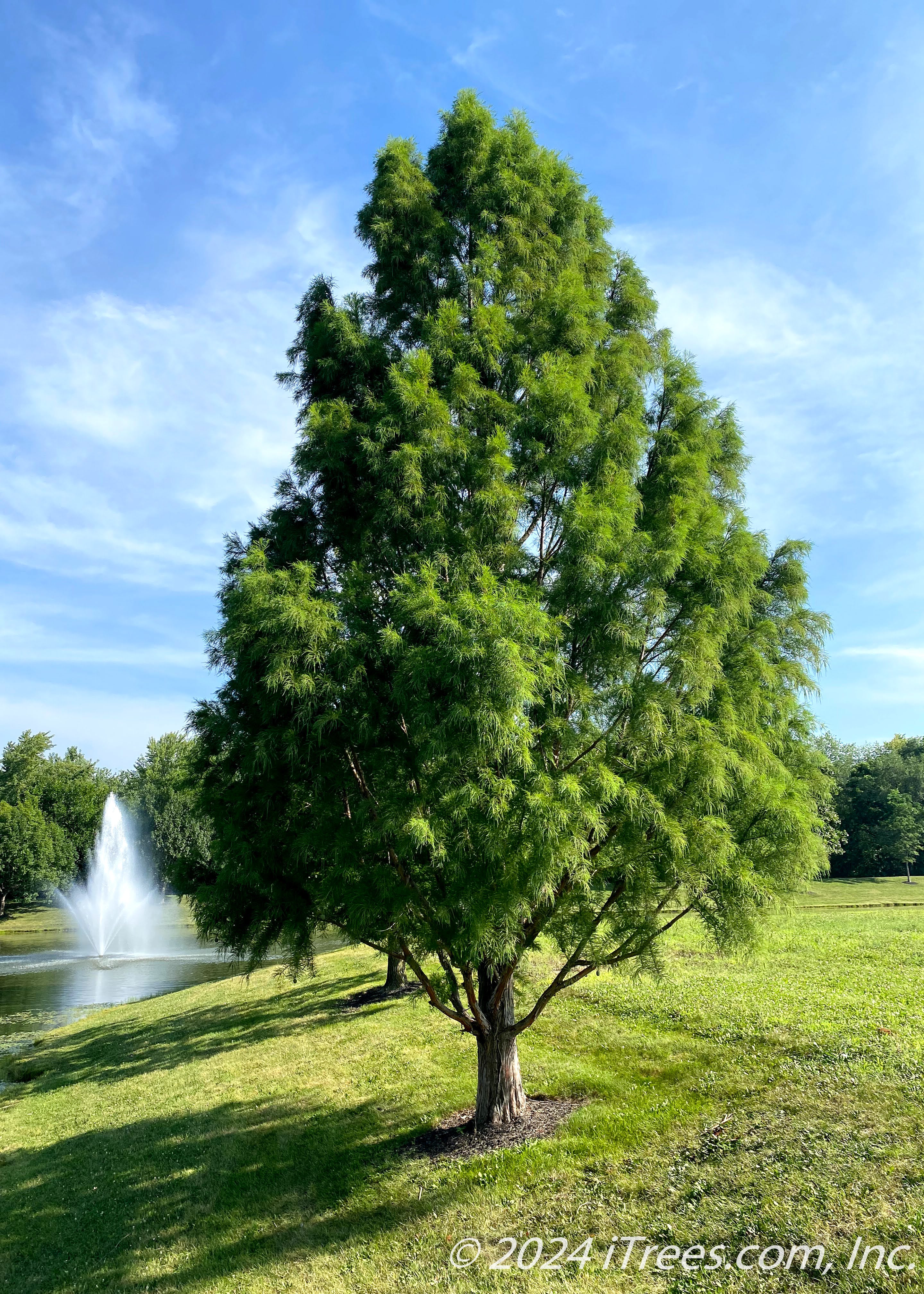
This native, ancient beauty is known for growing in wetlands and swampy sites. Bald Cypress commands attention with its soft canopy of feathery foliage. In its youth, this deciduous conifer has evergreen qualities. The big difference is that instead of holding onto its needles throughout winter, Bald Cypress drops its coppery-colored needle-like leaves in fall. In winter, it can finally show off its reddish-brown shaggy bark. Bald Cypress is hardy, tough, and adaptable, tolerating a wide range of soil conditions, including wet and dry sites, and even standing water. Bald Cypress is a beautiful addition to spacious landscapes. In odd-numbered groupings, it adds a naturalized feel. This tree is also capable of being a standalone accent in front or back yards, or along parkways. It grows well in wide-open areas, adding charm to community parks or surrounding golf courses. This majestic tree has stood the test of time for a reason. Bald Cypress is tolerant of most Chicagoland soil conditions and is a smart, native substitute for evergreens in wet locations.
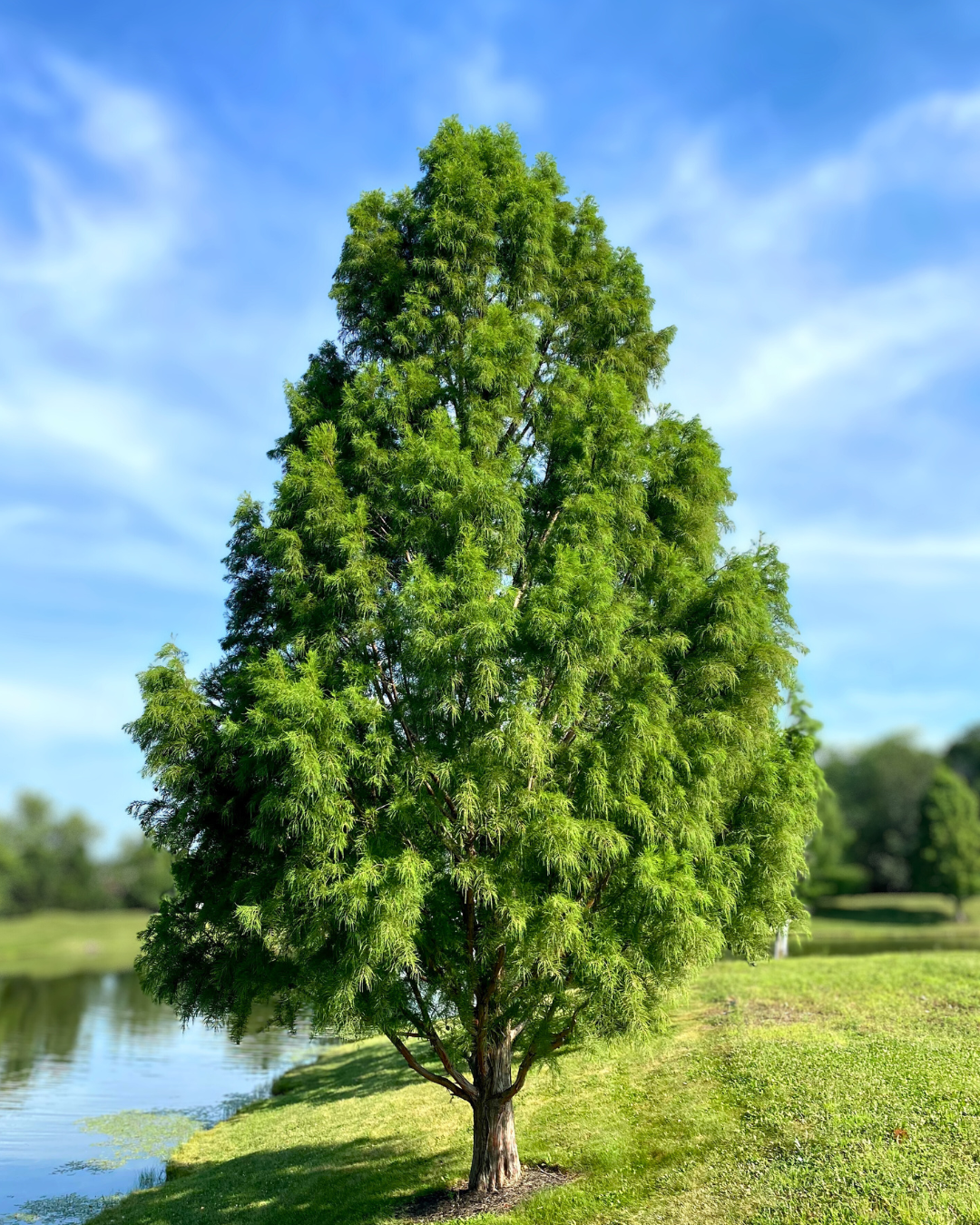
Green Whisper® Bald Cypress is similar to its parent, the native Bald Cypress. The biggest difference between this tree and the straight species is its spring and summer leaf color. Green Whisper® Bald Cypress's leaves emerge in spring with the softest, brightest spring-green feathery leaves. This variety has a well-branched, uniform, and pyramidal form, as well as a vigorous growth rate. Green Whisper® Bald Cypress is an excellent option for saturated sites. It adds beauty to open front yards, backyards, and open landscapes as an accent tree, and grows beautifully along parkways, boulevards, and wide medians.
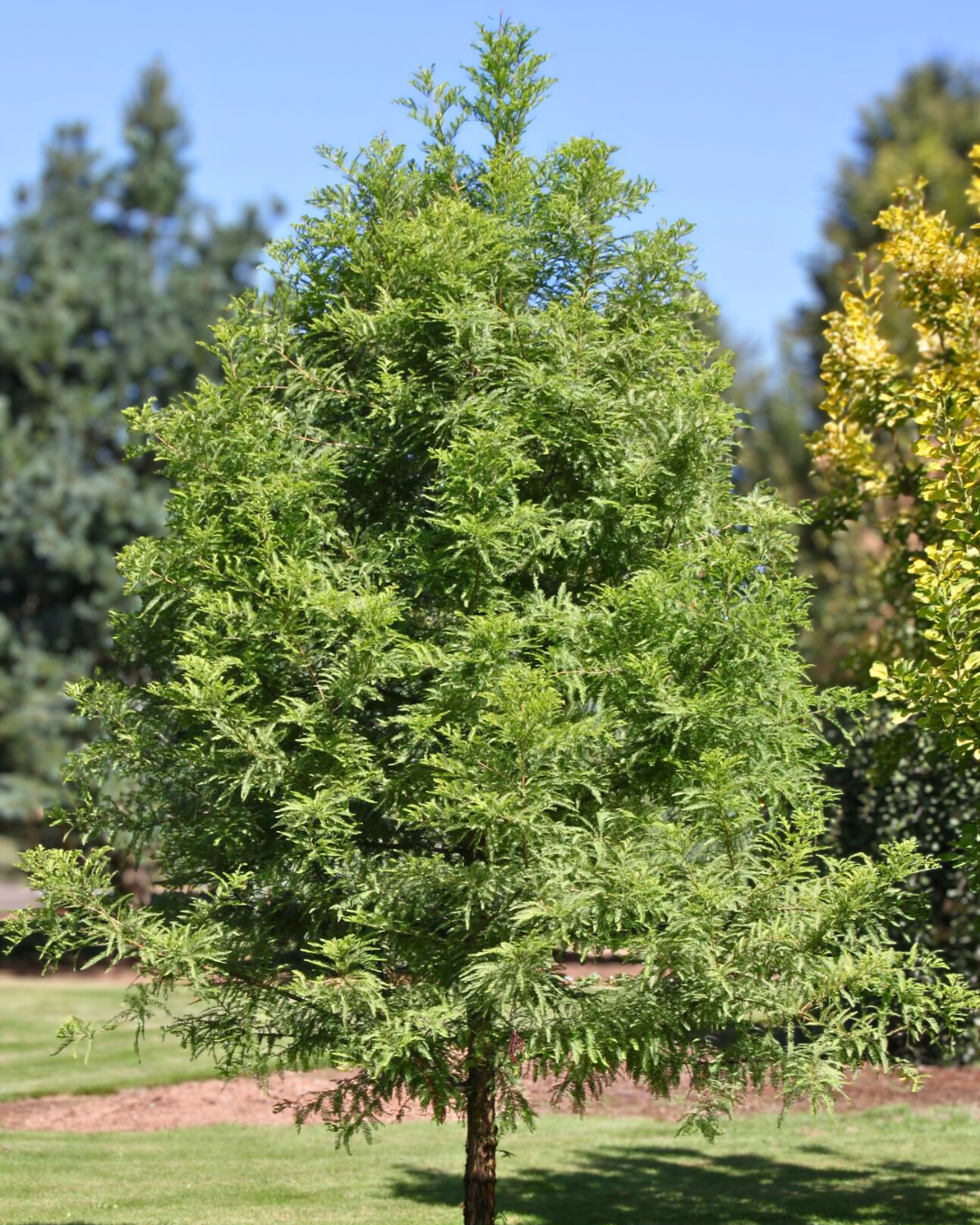
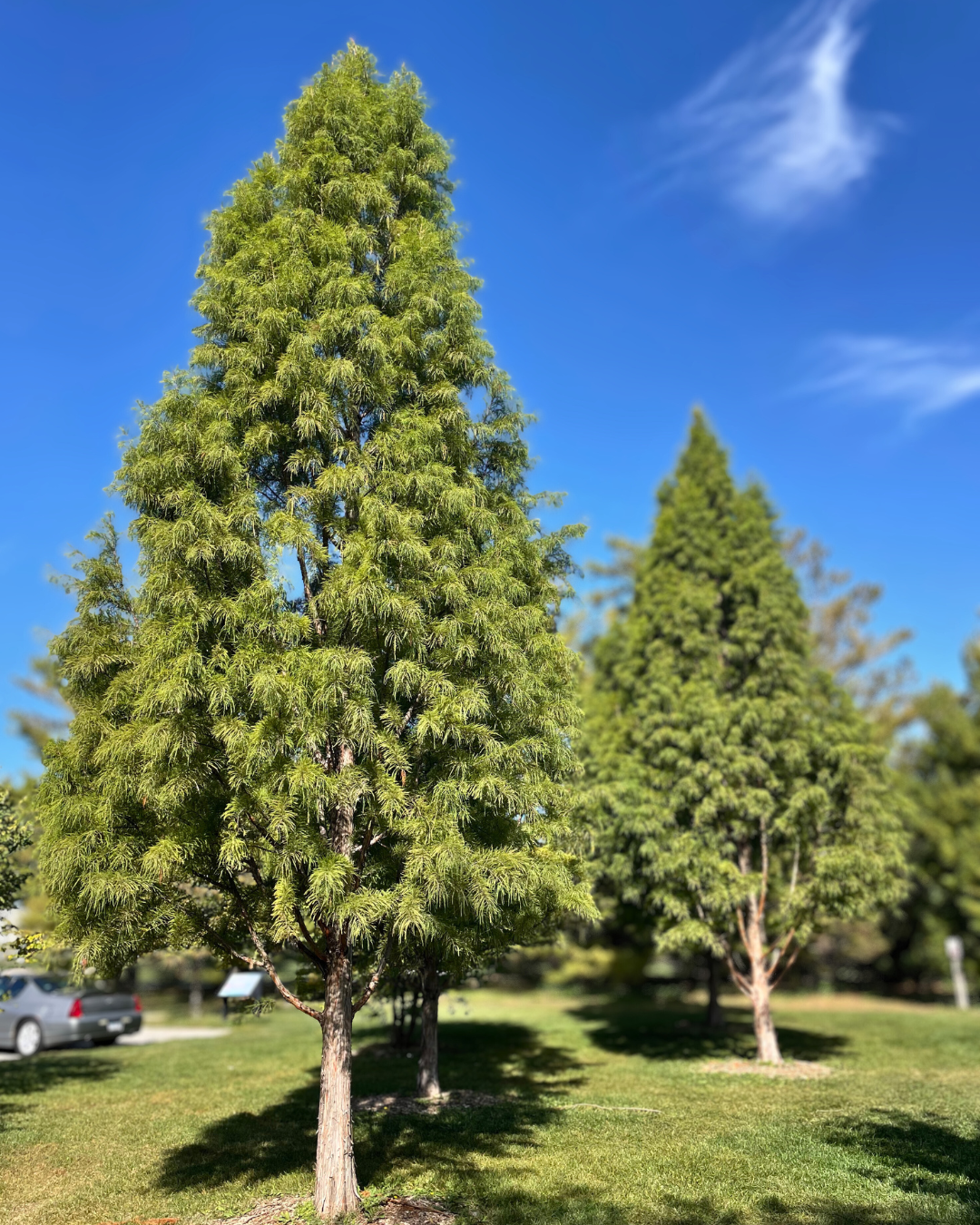
Unlike Bald Cypress and Green Whisper® Bald Cypress, Shawnee Brave™ Bald Cypress has a more narrow upright form reaching only 20 feet wide once fully mature. This tree has proven to be widely adaptable in urban conditions, as it will flourish in standing water or well-drained soils. In the fall, it will show off with a handsome rusty orange color, then it will drop its needles, allowing its bark to stand out, adding winter interest. Shawnee Brave™ Bald Cypress is a unique choice for adding privacy, shade, and beauty. This tree is where form meets function! Plant it in areas that have overly saturated soils, but that also need shade and privacy. Plant this tree in odd-numbered groups for a natural look. It can be a vertical accent in large, spacious gardens and in open areas of the yard.
As you browse around and do your own research on what to plant where, be sure to keep in mind that we are a phone call or email away. Our friendly staff can help you with getting customized recommendations for your yard.
If you're more of a do-it-yourselfer, be sure to head to our Design Center to get started with planning your next tree planting project!


.png)